
Conjunctions are small but important words. They help you connect ideas in a sentence. With but, so, and, because, you can:
- show contrast
- show a result
- add information
- give a reason

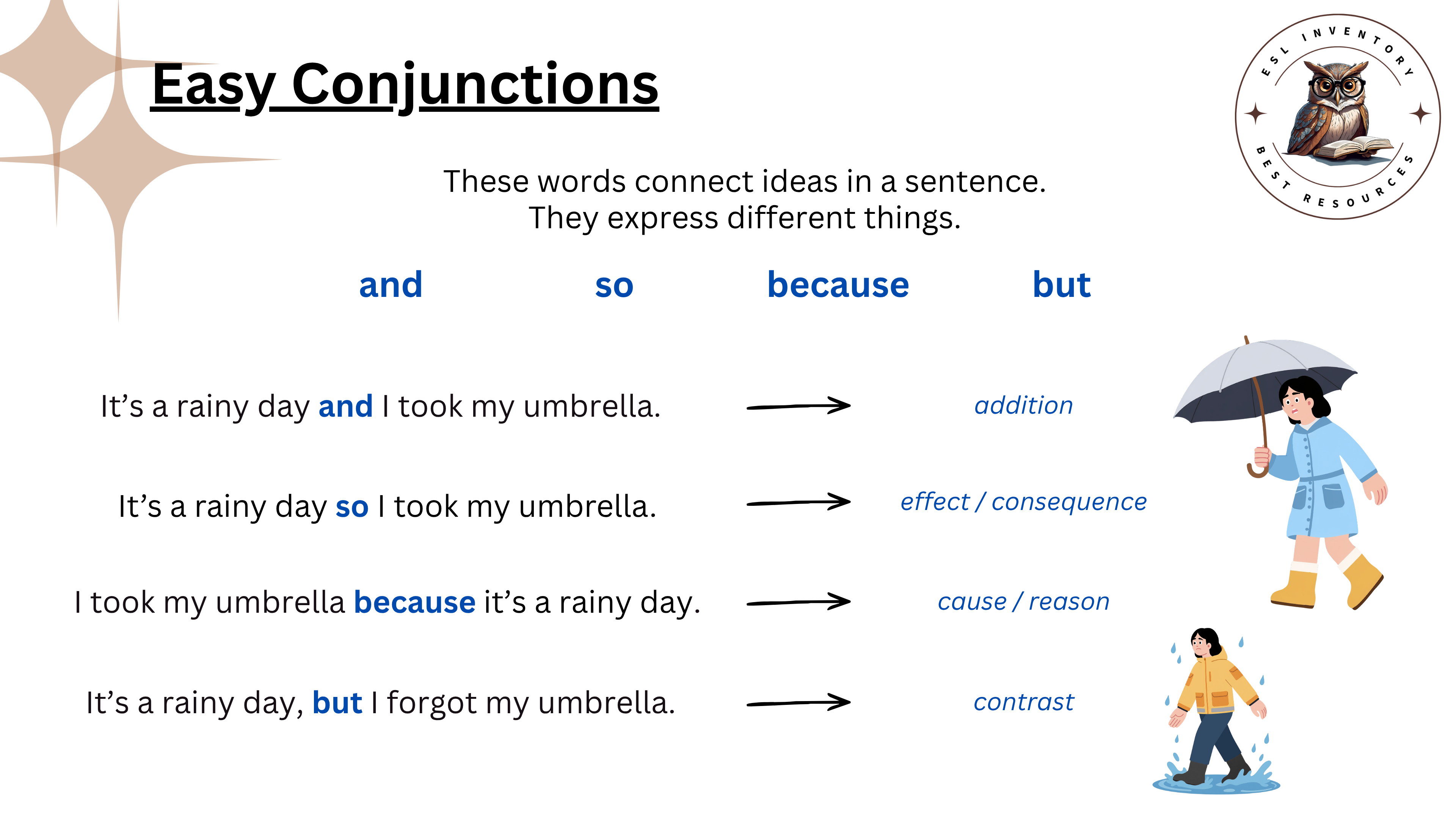
| Conjunction | Use | Example |
|---|---|---|
| and | to add information (one idea + another idea) | It’s a rainy day and I took my umbrella. |
| but | to show contrast (something different or surprising) | It’s a rainy day, but I forgot my umbrella. |
| so | to show result / consequence (what happens next) | It’s a rainy day, so I took my umbrella. |
| because | to give a reason / cause (why something happens) | I took my umbrella because it’s a rainy day. |
Common mistakes to avoid
1. Using because like so
Wrong:
It’s raining because I took my umbrella.
Correct:
It’s raining, so I took my umbrella.
Because = reason
So = result
2. Forgetting the comma before but and so
At beginner level, it’s good to use a comma. Correct:
✔ It’s cold, so I wear a coat.
✔ I like coffee, but I don’t like tea.
3. Using and when ideas are different
Wrong:
I like coffee and I don’t like tea.
Right:
I like coffee, but I don’t like tea.
Quick summary
- and = add information
- but = contrast
- so = result
- because = reason
These four conjunctions help you build clear and natural sentences in English.
Conjunctions: but, so, and, because Exercises
More Exercises:
and, but, or, so, because: AgendaWeb | TestEnglish
and, but, or, so: EnglischHilfen1 | EnglischHilfen2 | AgendaWeb | StudiesAtUVic | ToLearnEnglish | KhanAcademy | Grammarism | LiveWorksheets | EnglishCurrent